2026 - Present
AI Research Fellow
Imageomics Institute, The Ohio State University
A funded year of bioinformatics and imageomics research, including field work in Hawaii applying machine learning to environmental questions.
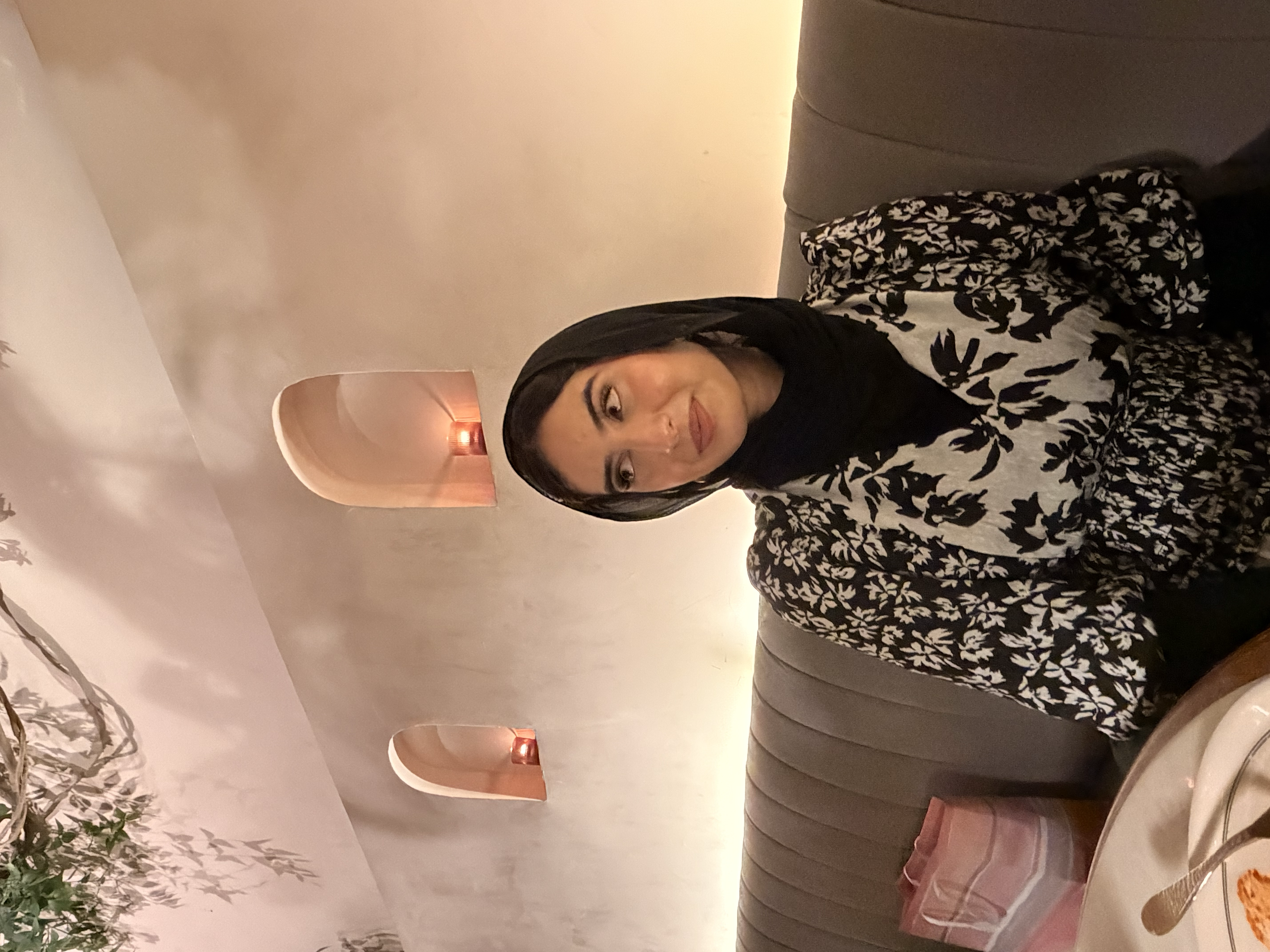
I teach machines to read tissue.
I'm a computer science master's student at Dartmouth, working in Dr. Saeed Hassanpour's lab on machine learning for digital pathology. I came into this through precision oncology, building proton-therapy tools where the model output guided a real treatment plan. That's why I care as much about whether a model is fair and usable as whether it scores well.
Open to research and industry roles in ML and bioinformatics
I adapt large-scale foundation models to massive, complex datasets. Emphasis is placed on interpretability and validation, so I build the tools necessary to understand what the model is learning and how it generalizes.
A model is only as good as the infrastructure supporting it. I engineer the whole pipeline. From data ingestion to compute scheduling and validation, I make sure the model can be trained and deployed reliably.
I begin from the decision someone is trying to make, scope what the model has to support, and iterate until it's usable.
Classified cholestatic liver disease from whole-slide images using GigaPath. Developed a multimodal fusion model that outperformed single-modality models by 12% in F1 score.
Paper in preparation
A full-stack tool built with the New York Proton Center that reconstructs proton stopping-power maps from dual-energy CT, holding under 1% error. My U-Net variant beat analytic methods by 60% in high-density regions.
Paper submitted Repository
Shortcut-mitigation methods are usually validated on one dataset and one population. I tested whether they hold up across Fitzpatrick skin types using Fitzpatrick17k and DDI — and whether the method rankings survive the move.
Paper in preparation
How do MedGemma's medical reasoning performance change as CT image quality is progressively degraded? Can evidence-grounded prompting improve robustness?
Paper in preparation
Smaller things — simpleCoder, a terminal coding agent with semantic RAG and file-permission guardrails, among others — live on GitHub.
Imageomics Institute, The Ohio State University
A funded year of bioinformatics and imageomics research, including field work in Hawaii applying machine learning to environmental questions.
Hassanpour Lab, Geisel School of Medicine, Dartmouth
Computational pathology on whole-slide images, plus co-leading a YOLOv8 ultrasound system for cervical cancer screening in low-resource settings.
New York Proton Center
Built CT analysis tools generating stopping-power maps under 1% error for proton treatment planning, and benchmarked dual-energy against single-energy models.
North Atlantic Industries, Bohemia, NY
Shipped a GPT-powered document search system that cut support tickets in half, and built Python ETL pipelines and Dockerized cross-compilation builds on AWS.